
Putting Person-Centered Supports Into Action
We’re publishing a series of articles each month about the tenets of the NADSP Code of Ethics, which serve as a straightforward and relevant guide for direct support professionals (DSPs). It helps them resolve the ethical dilemmas they face every day and encourages them to achieve the highest ideals of the profession. This edition covers the tenet ‘Person-Centered Supports.’
Inside The Tenet: Person-Centered Supports
We hear the phrase and the terminology “Person-Centered” all the time in our field. When we look at all that we need to uphold and perform as direct support professionals in order to be person centered, it can be overwhelming. The NADSP Code of Ethics should be used to help guide us in being person-centered.
The commitments and “I will” statements that are the directives in this tenet of the Code offer clear guidance to direct support professionals. The “I will” statements emphasize person-centered support that honors the rights, choices, and individuality of each person. Direct support professionals work collaboratively with people and their support teams to understand what is important to and for them, while promoting independence, self-direction, and meaningful participation in all aspects of life. They respect each person’s culture, preferences, relationships, communication methods, and social connections, adapting support to meet unique needs.
Direct support professionals remain flexible, responsive, and committed to helping people achieve their goals while balancing professional responsibilities and seeking guidance when necessary. They encourage self-advocacy, support informed decision-making, and address barriers that may limit a person’s choices or opportunities. Above all, they recognize each individual’s right to direct their own life, maintain relationships of their choosing, and receive support that reflects dignity, respect, and inclusion.
Tenet Video: Person-Centered Supports
This short video covers the NADSP Code of Ethics tenet ‘Person-Centered Supports.’ NADSP has produced videos about all of the tenets, which are available through our YouTube playlist. We have also created a version that shares audio descriptions of the content, as well as a version with ASL interpretation.
The Impact On People Receiving Services
Person-centered support helps people build confidence, develop skills, strengthen relationships, and participate more fully in their communities. It encourages services that are tailored to each person’s needs, rather than relying on one-size-fits-all approaches. By listening carefully and adapting supports – and by exploring creative solutions to problems or situations – direct support professionals help people overcome barriers and pursue meaningful opportunities. A person-centered approach helps to promote dignity, respect, and self-determination, while improving quality of life and a life of prestige, and hopefully, distinction! Ultimately, person-centered practices empower people to achieve outcomes that are important to them and reflect their own vision of a fulfilling life.
Applying The Tenet In Daily Supports And Services
Direct support professionals can apply person-centered practices every day by learning what matters most to each person and using that information to guide support. For example, a DSP might work with a person and their team to create a weekly schedule that includes preferred activities, employment goals, or time with friends. When a person’s wishes conflict with agency requirements or safety concerns, the DSP can balance these responsibilities by discussing options, seeking supervision, and finding solutions that respect the person’s preferences.
DSPs promote independence by encouraging people to make choices about meals, clothing, transportation, and daily routines, even when support is needed. They can assist people who do not rely on speech by using communication devices, picture boards, sign language, or other preferred methods. Learning about a person’s culture, traditions, and social connections may involve asking questions, participating in cultural events, or supporting visits with family and friends.
Being adaptable means adjusting plans when circumstances change, while remaining focused on the person’s goals. For example, if a community activity is canceled, a DSP can help identify another meaningful option. DSPs also encourage self-advocacy by helping people prepare questions for meetings, express concerns, or share their preferences with service providers.
When policies or others’ opinions limit a person’s choices, DSPs should discuss the issue directly with the person and explore ways to honor their wishes. Finally, DSPs support each person’s right to build and maintain relationships by helping them stay connected with friends, family members, romantic partners, and community groups of their choosing, while respecting privacy and personal decisions.
Ethical Dilemma: An Example Involving ‘Person-Centered Supports’
A common ethical dilemma occurs when a person receiving services wants to make a choice that others believe is unwise or risky. For example, a person with an intellectual disability may want to move into their own apartment and live more independently. Family members and some staff may worry about safety, finances, or the person’s ability to manage daily responsibilities. They may prefer that the person remain in a more supervised setting.
The person-centered approach requires the direct support professional to focus first on the person’s goals, preferences, and right to self-determination. Rather than deciding for the person, the DSP works with them to understand their wishes, identify any potential risks, and help develop supports that increase the likelihood of success. This might include budgeting assistance, cooking lessons, transportation training, technology supports, or regular check-ins.
The direct support professional also helps facilitate discussions among the person and family members or guardian(s), and the person’s support team or support circle. This is important so concerns can be addressed without dismissing the person’s goals and ensuring all people that know and love this person can be of support. By applying person-centered principles, the direct support professional respects the person’s right to direct their own life, while helping them make informed decisions and access the supports needed to pursue their aspirations.
This approach balances the dignity of risk with health and safety considerations, and ensures that the person’s voice ALWAYS remains at the center of all decisions.
Tenet Tips For ‘Person-Centered Supports’
- Collaborate with people (and their teams) to understand what is important to and for them.
- Ensure that people are exercising their right to live as independently as possible and direct their own lives with appropriate support.
- Seek guidance from the people you support about their culture, preferences, social networks, and needs.
- Support each person’s right to manage relationships as they choose.
- Assist people who are unable to rely on speech, and/or who are unable to see or hear, to engage using their preferred communication methods.
- Rather than deciding for the person, work with them to understand them.
- Listen. Just listen.
Additional Resources For ‘Person-Centered Supports’
NADSP Code of Ethics
Additional NADSP Code of Ethics Resources

Foundations Of Justice, Fairness, Equity, and Inclusion
Maintaining Confidentiality and Privacy
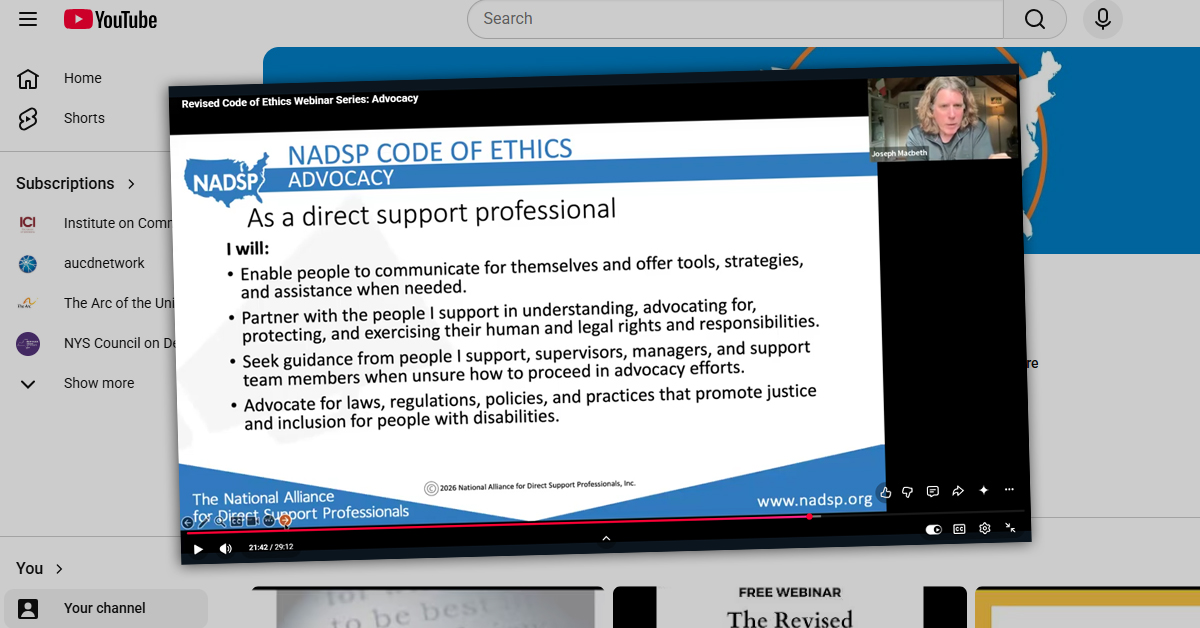
NADSP Code of Ethics: Tenet Webinars