
A Holistic Approach To Physical and Emotional Well-Being
We’re publishing a series of articles each month about the tenets of the NADSP Code of Ethics, which serve as a straightforward and relevant guide for direct support professionals (DSPs). It helps them resolve the ethical dilemmas they face every day and encourages them to achieve the highest ideals of the profession. This edition covers the tenet ‘Physical and Emotional Well-Being.’
Inside The Tenet: Physical and Emotional Well-Being
The Physical and Emotional Well-Being tenet of the NADSP Code of Ethics takes into consideration the role of a direct support professional, and the well-being of a person supported. The tenet states, “As a direct support professional, I will promote the emotional, physical, spiritual, and personal well-being of the people I support. I will respect their autonomy while ensuring safety and reducing harm.”
In addition to this, the tenet asks direct support professionals to commit to maintaining their professional boundaries, report abuse to the appropriate people, advocate for less restrictive plans, and recognize the impact of past and present trauma. A few other ‘asks’ from this tenet include supporting decision-making, while identifying risks and communicating said risks; inform people supported of their right to not be harmed and how to advocate for themselves should harm occur; teach other professionals the signs and symptoms of other health concerns, including emotional health concerns. Last, but not least, assist people in understanding more about their sexual and reproductive health, coordinating with other professionals when necessary.
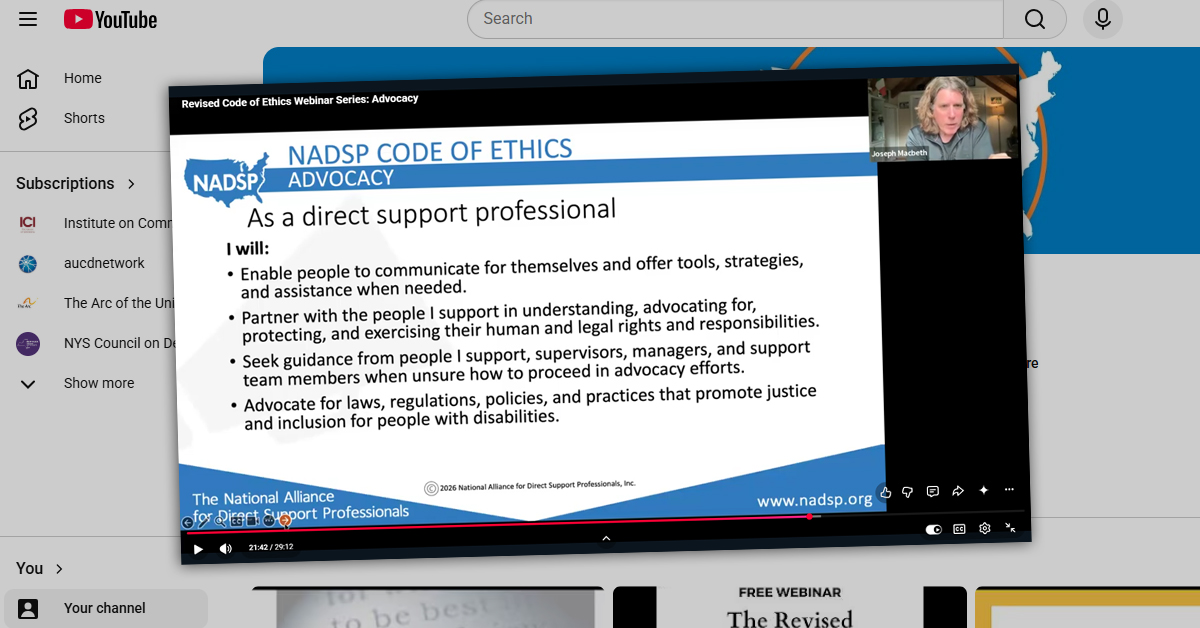
Tenet Video: Physical and Emotional Well-Being
This short video covers the NADSP Code of Ethics tenet ‘Physical and Emotional Well-Being.’ NADSP has produced videos about all of the tenets, which are available through our YouTube playlist. We have also created a version that shares audio descriptions of the content, as well as a version with ASL interpretation.
The Impact On People Receiving Services
I once heard someone state that, “Help without asking is control.” Have you ever helped someone who didn’t want to be helped? Have you ever given “support” that was never asked for? How do we navigate supporting someone who is about to make a risky decision?
What if the person I’m supporting wants to create a dating profile? As a direct support professional who is supporting this person, I know the dangers of internet dating. Do I stop this person from creating a profile? What does the NADSP Code of Ethics say about this? Doesn’t this put the person in harm’s way?
The tenet is a reminder of how to handle these delicate situations. No one’s life should be limited and it is important that people know what could happen. This tenet helps us to maintain a person’s dignity while participating in what could be considered a risky situation.
The tenet states, “Partner with each person and their support network to identify risks and create safeguards.” It also states, “Support informed decision-making, even when those decisions involve personal risk, and educate team members about this right when appropriate.” If there is a risk involved that the person being supported does not know of, then it is the direct support professional’s role to inform the person of that risk so they can make an informed decision.
Applying The Tenet In Daily Supports And Services
According to the Physical and Emotional Well-Being tenet, “I will: Recognize the effects of past and present trauma and create environments that promote healing and prevent further harm.”
We have no idea the life that some of the people we support have lived. We have no idea the kind of life our colleagues live or have lived. We all experience life with varying levels of trauma and support. Unfortunately, we cannot undo anyone’s past, but we can make a more comfortable present. We can promote physical and emotional well-being by intentionally moving slower and taking our time during tasks. We can lower stimulation and play nature sounds in the background. We can encourage walks and nature outings.
The tenet also states, “I will: Develop and nurture respectful relationships while maintaining professional boundaries.” One of the best ways we can improve someone’s emotional health is by showing them respect and learning what helps them feel respected. We can build respect with people through everyday actions and being intentional in our conversations. We can build respect by asking questions about a person’s interests, passions, and hobbies. We can ask for consent before moving forward in our actions. For example, asking, “Is it okay if I sit here?” Or knocking and waiting for an invitation to enter a room.
These things not only encourage a sense of respect amongst yourself and the people you support, but it also establishes a safe environment.
Ethical Dilemma: An Example Involving ‘Physical and Emotional Well-Being’
Picture this – direct support professionals are meeting to discuss Bill’s transfer. Bill is getting older and his support needs are changing. Bill is not being involved in this because staff fear he won’t handle the news well. They are hoping he will quickly adapt after his transfer since he will be around people closer to his age.
Debbie started as a direct support professional over a year ago and recently obtained her DSP-I from the National Alliance for Direct Support Professionals. Debbie regularly attends webinars hosted by the NADSP. She has learned a lot and tries her best to be a good example to her colleagues.
Upon hearing about the plans to transfer Bill without notice, Debbie courageously speaks up and quotes the NADSP Code of Ethics, stating “According to the code we will support informed decision-making, even when those decisions involve personal risk, and educate team members about this right when appropriate. We will recognize the effects of past and present trauma and create environments that promote healing and prevent further harm. I don’t think we are supporting informed decision-making, and we could be causing Bill unnecessary trauma by not involving him.”
Debbie’s supervisor thanks Debbie for reflecting on the code and making valid points. As a result, Bill is being brought into the transition planning meetings. Debbie encourages Bill to also speak up and reminds him that it his right to have a say. Together Bill, Debbie, Debbie’s supervisor, and colleagues come up with a plan that is person-centered and keeps Bill’s dignity intact. Bill is happy and prepared to transition to his new home.
Tenet Tips For ‘Physical and Emotional Well-Being’
- Respect people’s choices and inform them of risk.
- Educate yourself on different wellness topics (movement exercises, breathing exercises, creative activities)
- Ask questions! Don’t be afraid to ask someone “How can I support you right now?” or “Is there anything you would like me to do differently?”
- Attend professional development trainings to deepen your understanding.
- Ensure people know their rights and the Dignity of Risk!
- Speak up! Even when it is intimidating or scary. You can make a huge difference in someone’s life.
Additional Resources For ‘Physical and Emotional Well-Being’’
- Frontline Initiative: DSPs Supporting People’s Health and Wellness
- MHDD: Plain Language Summary: Self-Determination & Dignity of Risk
- NADSP: Empowering People In Making Their Own Choices
- Frontline Initiative: Healthcare
- The International Journal: Dignity of Risk
- The Nation’s Health: Mental Health Issues for People with IDD Can be Misunderstood
- Frontline Initiative: Trauma-Informed Care
NADSP Code of Ethics
Additional NADSP Code of Ethics Resources

Putting Person-Centered Supports Into Action

Foundations Of Justice, Fairness, Equity, and Inclusion
Maintaining Confidentiality and Privacy