The NADSP Code of Ethics
Ethical guidelines to confront complex situations that direct support professionals faceDeveloped by The National Alliance for Direct Support Professionals (NADSP), the Code of Ethics serves as a straightforward and relevant guide for direct support professionals (DSPs), helping them resolve the ethical dilemmas they face every day and encouraging them to achieve the highest ideals of the profession. To download a printable version of the NADSP Code of Ethics, you can fill out the brief form below and click the ‘download’ button. Below that, you can browse relevant resources, view an online version of the NADSP Code of Ethics, and more.
Download The NADSP Code of Ethics

NADSP WEBINAR
The Revised NADSP Code of Ethics – An Introduction
In this webinar, you will learn about the revised NADSP Code of Ethics, including its updated tenets and ethical statements.
NADSP Code of Ethics Resources

Foundations Of Justice, Fairness, Equity, and Inclusion
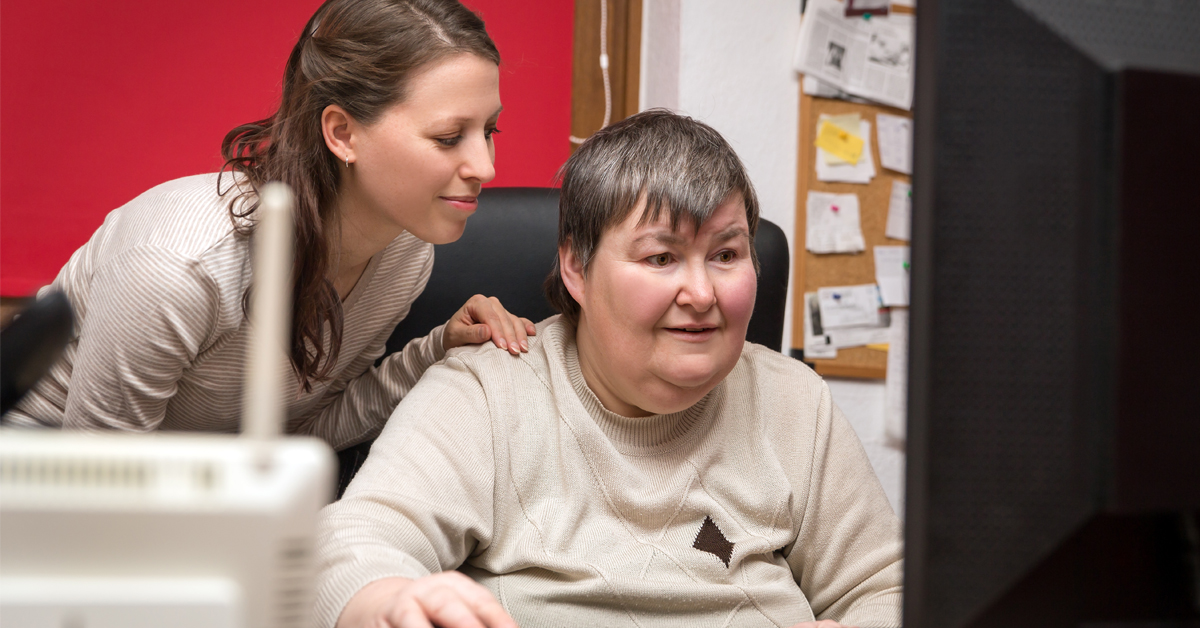
Maintaining Confidentiality and Privacy
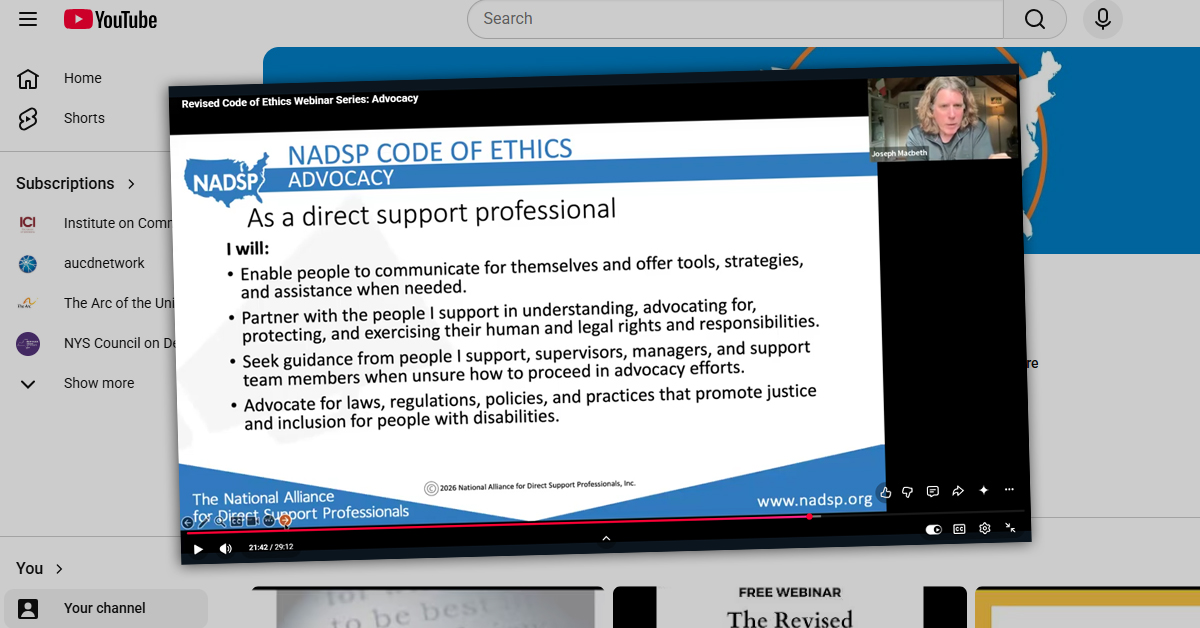
NADSP Code of Ethics: Tenet Webinars
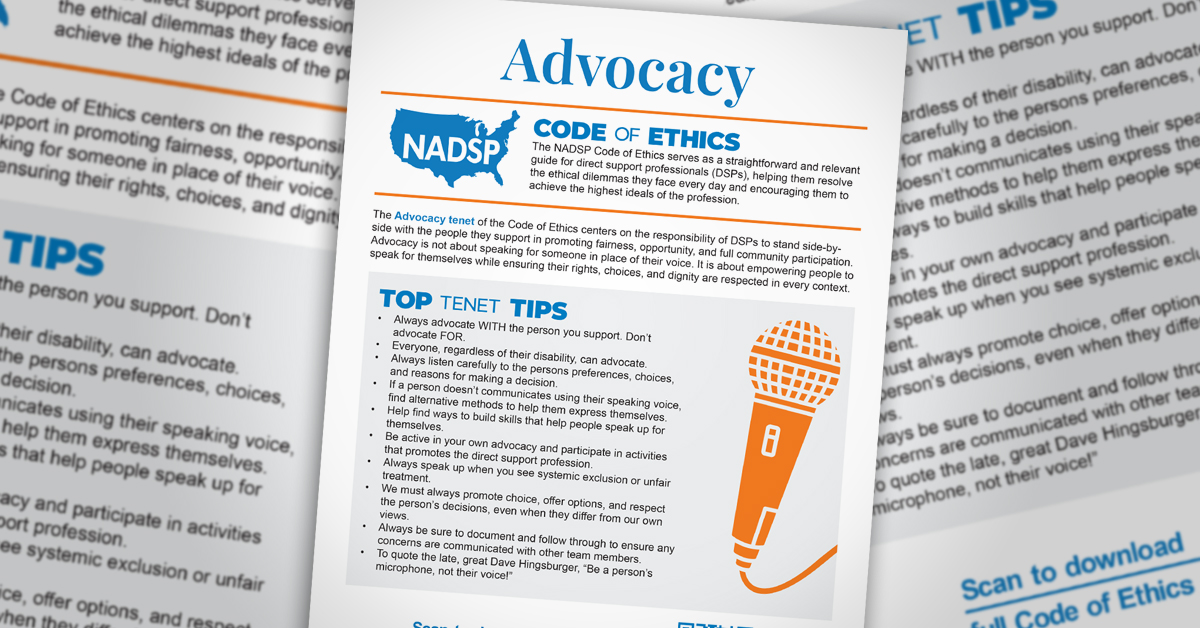
NADSP Code of Ethics: Tenet 1-Page Guides

The NADSP Code of Ethics Videos
NADSP has produced videos about the Code of Ethics, including each of its tenets. You can watch those videos below, or view them all together through our YouTube playlist. We have also created a version that shares audio descriptions of the content, as well as a version with ASL interpretation.
The NADSP Code of Ethics Tenets
Advocacy
As a direct support professional, I will advocate with the people I support for justice, equity, inclusion, and belonging in their communities.
I will:
- Enable people to communicate for themselves and offer tools, strategies, and assistance when needed.
- Partner with the people I support in understanding, advocating for, protecting, and exercising their human and legal rights and responsibilities.
- Seek guidance from people I support, supervisors, managers, and support team members when unsure how to proceed in advocacy efforts.
- Advocate for laws, regulations, policies, and practices that promote justice and inclusion for people with disabilities.
- Advocate for laws, regulations, policies, and procedures that promote and honor the direct support profession.
Confidentiality and Privacy
As a direct support professional, I will promote, protect, and respect the confidentiality of the people I support.
I will:
- Ask individuals how, when, and with whom they want their information shared.
- Follow the confidentiality policies and guidelines of my employer and the state, taking care to prevent private information from being overheard or seen by others.
- Disclose confidential information only with the person’s permission or when necessary to prevent serious or imminent harm.
- Understand relevant confidentiality and privacy laws and regulations to guide my decisions.
- Seek guidance from supervisors, managers, or policies when unsure of the correct course of action.
- Safeguard private information shared with me in confidence.
- Educate the people I support to understand what confidentiality is, its importance, and how to protect their own privacy.
Justice, Fairness, Equity, and Inclusion
As a direct support professional, I will advocate for and promote justice, fairness, equity, and inclusion for the people I support.
I will:
- Promote, protect, and ensure the human and legal rights, fundamental freedoms, and inherent dignity of the people I support.
- Ensure that my own biases do not interfere with honoring and supporting people.
- Support full inclusion in their communities as desired by the people I support and take action to eliminate barriers and segregation.
- Teach people I support about inclusion and opportunities that promote it in their lives.
- Ensure people feel free to express their identities as desired.
- Ensure equity in the opportunities, attention, and support I provide.
- Understand and respect the differences between emancipation, supported decision-making plans, and formal legal representation.
Person-Centered Supports
As a direct support professional, I will work in partnership with the people I support, approaching their goals and aspirations with flexibility, curiosity, creativity, and commitment.
I will:
- Apply person-centered practices, collaborating with individuals and their teams to understand what is important to and for them.
- Balance the expectations of the individuals I support with other professional responsibilities, seeking help from others when needed.
- Ensure the rights of individuals to live as independently as possible and direct their own lives with appropriate support.
- Assist individuals who are unable to rely on speech and/or who are unable to see or hear to engage using their preferred methods.
- Seek guidance from the people I support about their culture, preferences, social networks, and needs.
- Be prepared, adaptable, and dedicated to their goals and preferences, consulting with the support team when uncertain.
- Engage individuals in advocating for themselves in ways that work for them.
- Seek the person’s guidance when I see policies, practices, or the desires of others limiting their choices.
- Support each person’s right to manage relationships as they choose.
Physical and Emotional Well-Being
As a direct support professional, I will promote the emotional, physical, spiritual, and personal well-being of the people I support. I will respect their autonomy while ensuring safety and reducing harm.
I will:
- Develop and nurture respectful relationships while maintaining professional boundaries.
- Teach people to recognize signs and symptoms of physical and mental health concerns, understand prevention strategies and consequences of illnesses, and build advocacy skills to access culturally relevant and accessible services.
- Assist people in understanding and advocating for their sexual and reproductive health, enlisting professional guidance as needed.
- Teach individuals to understand and report abuse, neglect, exploitation, or harm.
- Report any observed or suspected abuse, neglect, or exploitation to the appropriate authorities.
- Partner with each person and their support network to identify risks and create safeguards.
- Support informed decision-making, even when those decisions involve personal risk, and educate team members about this right when appropriate.
- Work with the person and their team to find alternatives and advocate for removing unnecessary restrictions and limitations in support plans.
- Recognize the effects of past and present trauma and create environments that promote healing and prevent further harm.
Professionalism, Accountability and Growth
As a direct support professional, I will support people in leading the lives they choose. I will build strong partnerships with them, their families, support networks, other professionals, and the community. I recognize that these partners rely on me to bring my best self to this profession and to be accountable for my actions.
I will:
- Understand, appreciate, and interact effectively with people from different cultural backgrounds through learning, self-reflection, and adapting my behavior to connect respectfully with others.
- Reflect on my own values and biases and recognize how they may influence my professional decisions.
- Acknowledge my limitations and seek guidance from people I support, colleagues, supervisors, or mentors when needed.
- Take responsibility for my decisions and actions and learn from mistakes.
- Promote accountability among coworkers and others involved in the lives of the people I support.
- Be transparent and honest in all communication.
- Lead by example, modeling ethical behavior for co-workers, the individuals I support, and the community.
- Pursue lifelong learning, professional development, and collaboration to strengthen my knowledge and skills.
- Maintain my physical, mental, and emotional well-being to best support others.
Relationships and Social Roles
As a direct support professional, I will assist the people I support in developing and maintaining relationships and social roles that matter to them.
I will:
- Support individuals in building and maintaining safe, positive, and reciprocal relationships.
- Support people in identifying strategies to use when they want to end a relationship.
- Develop and maintain clear and respectful boundaries with the people I support.
- Ensure individuals can make informed choices about expressing their sexuality and gender identity.
- Support people in having valued social roles in their communities.
- Separate my personal beliefs about relationships, including sexual relationships, from those of the people I support.
- Educate individuals to recognize, prevent, and respond to bullying, dismissal, prejudice, bias, discrimination, abuse, or neglect, whether toward them or by them.
- Respect the therapeutic relationships individuals have with doctors, counselors, therapists, and other professionals, ensuring they feel safe and supported in these environments.
Respect
As a direct support professional, I will respect the dignity, humanity, and uniqueness of the people I support. I will recognize that they have full lives and histories from before I started supporting them, and I will meet them where they are.
I will:
- Seek to understand each person’s personal history, social network, goals, and expectations for the future.
- Recognize and respect each person’s humanity and identity, including disability, religion, sexual orientation, gender identity, race, ethnicity, language, communication methods, socio-economic status, and cultural background.
- Support each person’s choices, preferences, abilities, and opinions.
- Protect each person’s privacy.
- Partner with individuals to pursue opportunities for belonging and contribution to their communities.
- Use respectful and inclusive language that reflects each person’s preferences.
- Extend kindness and respect to each individual and to members of their network, including family, friends, neighbors, and professionals.
- Recognize my own dignity and worth, advocating for respectful treatment and seeking support when needed.
Self-Determination and Choice
As a direct support professional, I will honor and assist the people I support to make choices and direct their lives to the fullest extent possible and within the context of their culture and uniqueness.
I will:
- Educate and support individuals to make choices and practice self-determination in all areas of life – physical, intellectual, emotional, social, financial, environmental, and spiritual.
- Respect each person’s right to make decisions, take risks, understand responsibilities, and experience the dignity of learning from the outcomes of those decisions.
- Support each individual’s potential for lifelong learning and growth.
- Teach people to understand and use mistakes as valuable opportunities for learning and growth.
- Support the right of individuals to direct their services.
- Understand that individuals with legal representatives still have the right to make choices about their lives and seek guidance from a supervisor or manager when unsure.
- Respect and honor cultural differences in how self-determination and decision-making are understood and practiced.
Set Up DSPs For Success
NADSP’s ‘Onboarding Curriculum’ features an opportunity like no other for organizations to set a professional tone and expectation for their newest hires to understand the skilled world of direct support.