
Maintaining Confidentiality and Privacy
We’re publishing a series of articles each month about the tenets of the NADSP Code of Ethics, which serve as a straightforward and relevant guide for direct support professionals (DSPs). It helps them resolve the ethical dilemmas they face every day and encourages them to achieve the highest ideals of the profession. This edition covers the tenet ‘Confidentiality and Privacy.’
Inside The Tenet: Confidentiality and Privacy
Direct support professionals (DSPs) have a professional responsibility to understand and follow all the guidelines surrounding confidentiality that have been established by various levels of government and by their employer’s policies. They also must understand and follow the ethical guidelines established by their profession, as well as the expectations of the person they are supporting.
All those guidelines can be a lot to keep track of, so DSPs may need to seek guidance from a supervisor or manager when it is not clear how they should navigate the particular situations they encounter. DSPs also have a role in teaching the people they support about these issues, including their rights and responsibilities when it comes to their own personal information.
Tenet Video: Confidentiality and Privacy
This short video covers the NADSP Code of Ethics tenet ‘Confidentiality and Privacy.’ NADSP has produced videos about all of the tenets, which are available through our YouTube playlist. We have also created a version that shares audio descriptions of the content, as well as a version with ASL interpretation.
The Impact On People Receiving Services
People who receive services should be able to rely on each and every direct support professional’s commitment to keep their information private. It is impossible to provide direct support to another human being without learning a great deal about them. That might include medical information, financial information, family background, or difficult moments from the past.
Some of those personal details that DSPs learn might not be things that person is comfortable sharing. Just as a doctor’s patient or an attorney’s client has a right to expect confidentiality from those professionals, the people receiving services have a right to expect confidentiality from direct support professionals.
Applying The Tenet In Daily Supports And Services
One of the key laws that is discussed when DSPs are taught about confidentiality is the Health Insurance Portability and Accountability Act of 1996, more commonly known as HIPAA. This law defines what information about a person would be considered protected health information (PHI) under Federal law and establishes under what circumstances a person’s PHI can be shared. DSPs working anywhere in the United States should know about HIPAA and their responsibilities under that law.
Some DSPs working in school settings may also need to understand their responsibilities under the Family Educational Rights and Privacy Act (FERPA), which is another Federal law that governs the privacy of an individual’s educational records.
As important as HIPAA and FERPA are to understanding a direct support professional’s responsibilities regarding confidentiality, the ethical responsibilities under the Code of Ethics can be broader than these Federal laws require. DSPs will often have access to information that does not strictly qualify as protected health information or as an educational record, but might represent information which DSPs have an ethical obligation not to share publicly.
DSPs are involved in many aspects of a person’s life, and there are many opportunities to become aware of personal and private information. As professionals, DSPs must be intentional in their approach to confidentiality.
Ethical Dilemma: An Example Involving ‘Confidentiality and Privacy’
Imagine that you are supporting a young adult while they are meeting an old friend for lunch. You sit separately at a nearby table, close enough to be available if needed but not wanting to intrude otherwise. You can’t help but overhear the two of them recalling a story from their time together in middle school. While the person you support clearly finds this story embarrassing, you think it is both charming and hilarious. You are certain that your coworkers would also really enjoy hearing this story.
So, can you share this story? This is not the sort of thing that was discussed in your HIPAA training, and your employer’s confidentiality policy doesn’t seem to cover these exact circumstances. The policy does say that you can share information when needed with other staff who support the same person, and you do often provide updates to each other when a new shift takes over. Maybe today’s update will just be more entertaining than usual?
This is the sort of ethical dilemma where reading and reflecting on the Code can help you to clarify your professional responsibilities. Let’s start with the overall language of the Confidentiality and Privacy tenet:
As a direct support professional, I will promote, protect, and respect the confidentiality of the people I support.
Following that overall language there is a series of ethical statements:
- Ask individuals how, when, and with whom they want their information shared.
- Follow the confidentiality policies and guidelines of my employer and the state, taking care to prevent private information from being overheard or seen by others.
- Disclose confidential information only with the person’s permission or when necessary to prevent serious or imminent harm.
- Understand relevant confidentiality and privacy laws and regulations to guide my decisions.
- Seek guidance from supervisors, managers, or policies when unsure of the correct course of action.
- Safeguard private information shared with me in confidence.
- Educate the people I support to understand what confidentiality is, its importance, and how to protect their own privacy.
The second, fourth, and seventh statements don’t seem to be particularly relevant to this situation, but the first, third and sixth do seem to apply. Is there a risk of “serious or imminent harm” if this information is not shared? If not, do I have the permission of the person I support to share it? Have I asked about “how, when, and with whom” they want to share this story? If you’re still uncertain after reflecting on the language of this tenet, the fifth ethical statement encourages seeking guidance from supervisors or managers.
Tenet Tips For ‘Confidentiality and Privacy’
-
- Be sure you understand your responsibilities under both the law and your employer’s policies.
- If you are uncertain about those responsibilities, speak to your supervisor or ask questions in training.
- Take some time to read and reflect on the NADSP Code of Ethics as well.
- As important as it is to “follow HIPAA,” there are potentially situations where it would be possible for a DSP to act unethically even if they are not violating that particular Federal law.
- Remember who the information in question belongs to.
Additional Resources For ‘Confidentiality and Privacy’
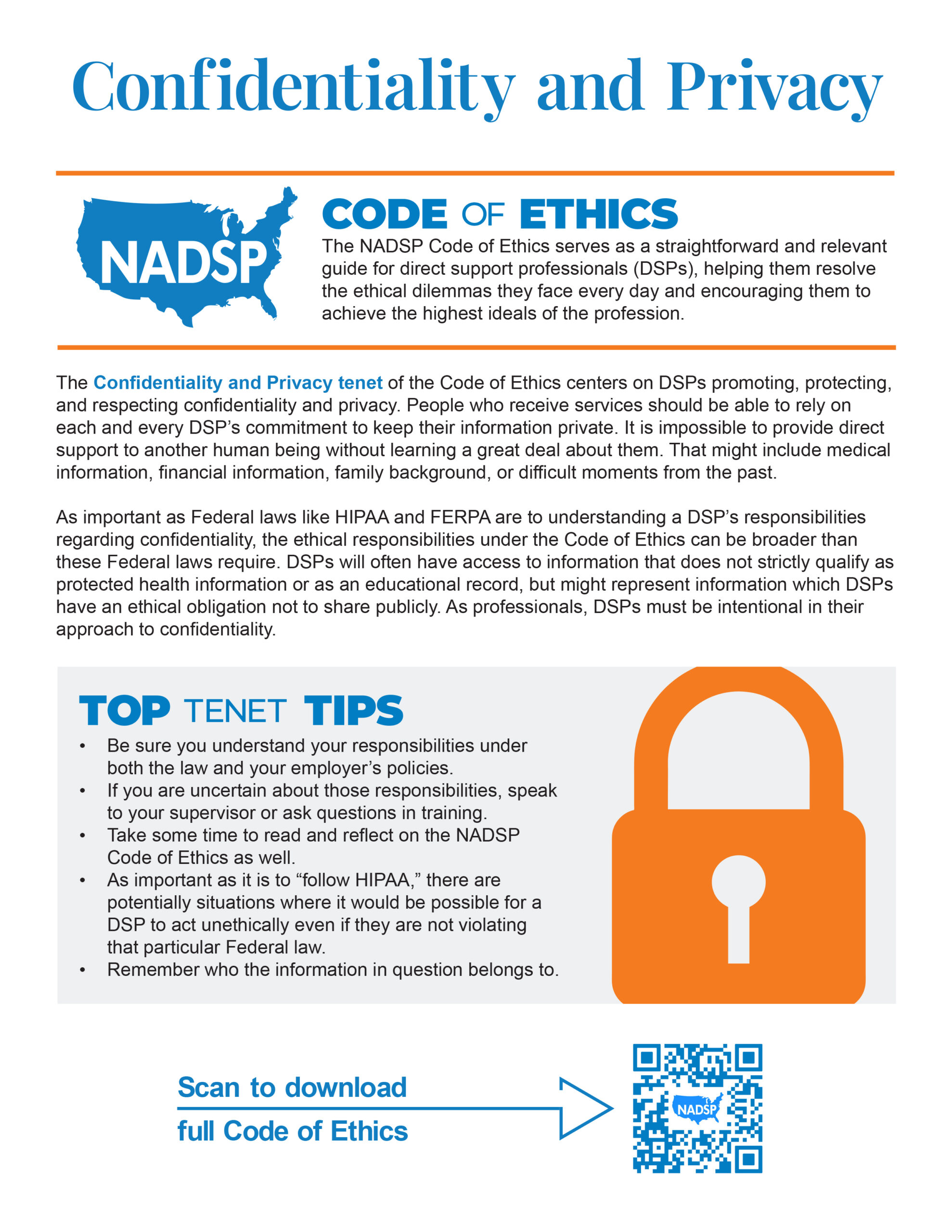
NADSP CODE OF ETHICS GUIDE
Tenet 1-Page Guide: Confidentiality and Privacy
This free 1-page guide shares an overview of the NADSP Code of Ethics tenet ‘Confidentiality and Privacy.’ It includes general information about the tool, the tenet, and tips for applying it in your daily work. Organizations and professionals are encouraged to print out the guide and share it with others.
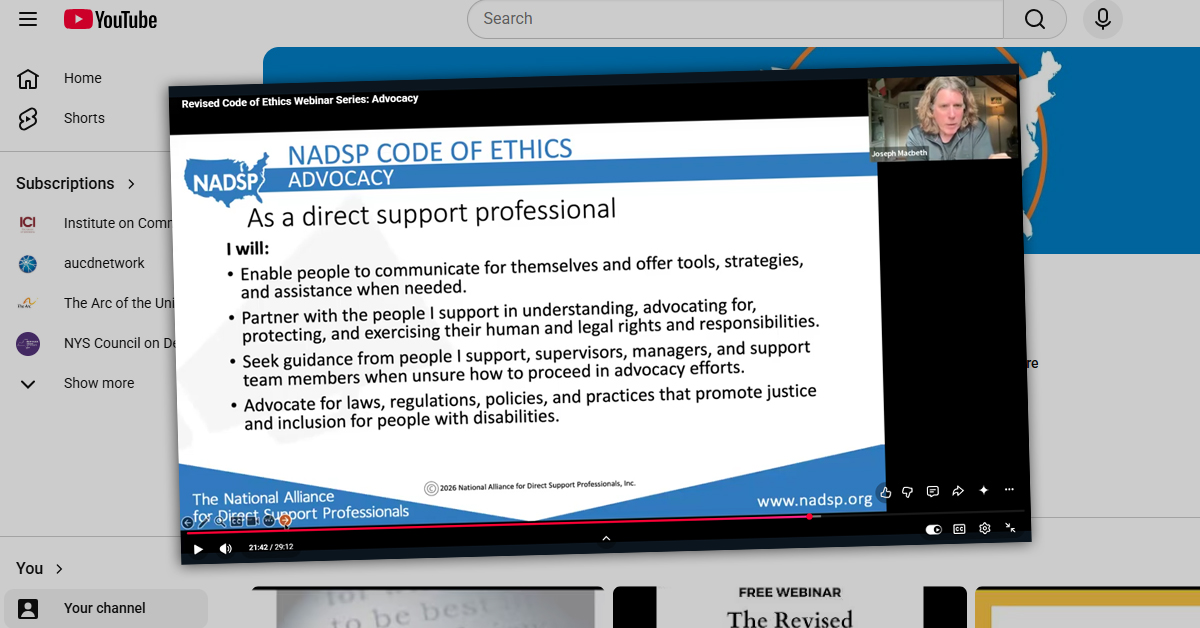
NADSP CODE OF ETHICS WEBINAR
Tenet Webinar: Advocacy
This 30-minute webinar recording shares practical tips, real-world examples, and ethical dilemmas related to the NADSP Code of Ethics tenet, Confidentiality and Privacy. In this session, you’ll learn more about this tenet and how you can embrace it in your daily supports and services.
NADSP Code of Ethics
The NADSP Code of Ethics serve as a straightforward and relevant guide for direct support professionals (DSPs), helping them resolve the ethical dilemmas they face every day and encouraging them to achieve the highest ideals of the profession.
Additional NADSP Code of Ethics Resources

Foundations Of Justice, Fairness, Equity, and Inclusion
NADSP Code of Ethics: Tenet Webinars
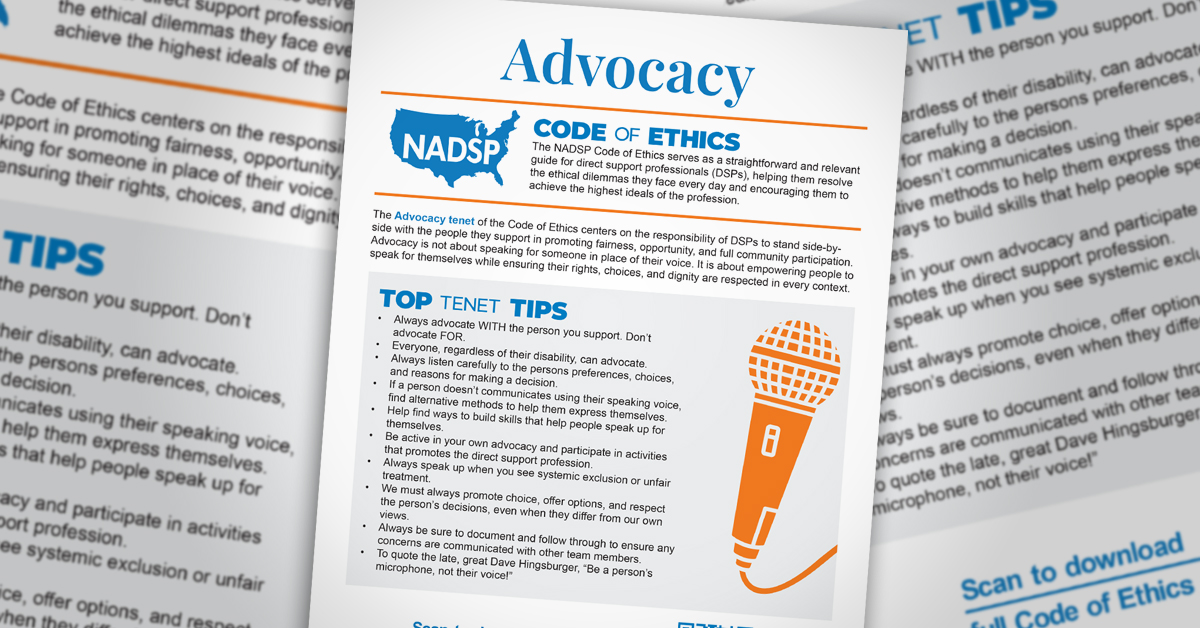
NADSP Code of Ethics: Tenet 1-Page Guides